Ecuador Struggles with Rafael Correa’s Legacy: The 2018 Referendum and Aftermath

Flash Report on Ecuador
By Grace Jaramillo, Postdoctoral Fellow at UBC, Political Science

Download the PDF.


Ecuador’s referendum cleared the path towards the restitution of horizontal accountability, starting with the election of the Council of Citizens’ Participation and Social Control.

Rafael Correa became Ecuador’s most consequential president since the democratic transition from military authoritarian rule in the late 1970s. Elected in 2006, he held power for more consecutive years than any other president in Ecuadorian history, after a prolonged period of political instability that witnessed ten presidents sworn into office in less than ten years. He was also the first left-of-centre President to be elected. For a country recovering from financial turmoil that led to a massive emigration wave, the promises of progressive change and to “take the country back” ignited support across historically divided constituencies. Read more.

Evo Morales’ Quest for Reelection in Bolivia

Flash Report on Bolivia
By Zaraí Toledo Orozco,
PhD Student, UBC Political Science
January 2018.

Download the PDF.

Since the election of Evo Morales in 2005, Bolivians have participated in 14 electoral processes. In addition to presidential and subnational elections, they have voted in several referenda on regional autonomy (2006, 2008, 2009 and 2015), confidence in the president and departmental prefects (2008), and constitutional change (2009). President Morales’ electoral vehicle, the Movement Toward Socialism (MAS), has proven capable of managing Bolivia’s contentious and well-organized social movements while achieving stable governance through a strategy combining direct negotiation with civil society and recurrent citizen consultations.

The most recent referendum, held in February 2016, asked Bolivians if they approved amendments to article 168 of the Constitution on the limits for presidential re-election. Read more.


Roadblocks to peace – past and present challenges for a permanent peace in Colombia

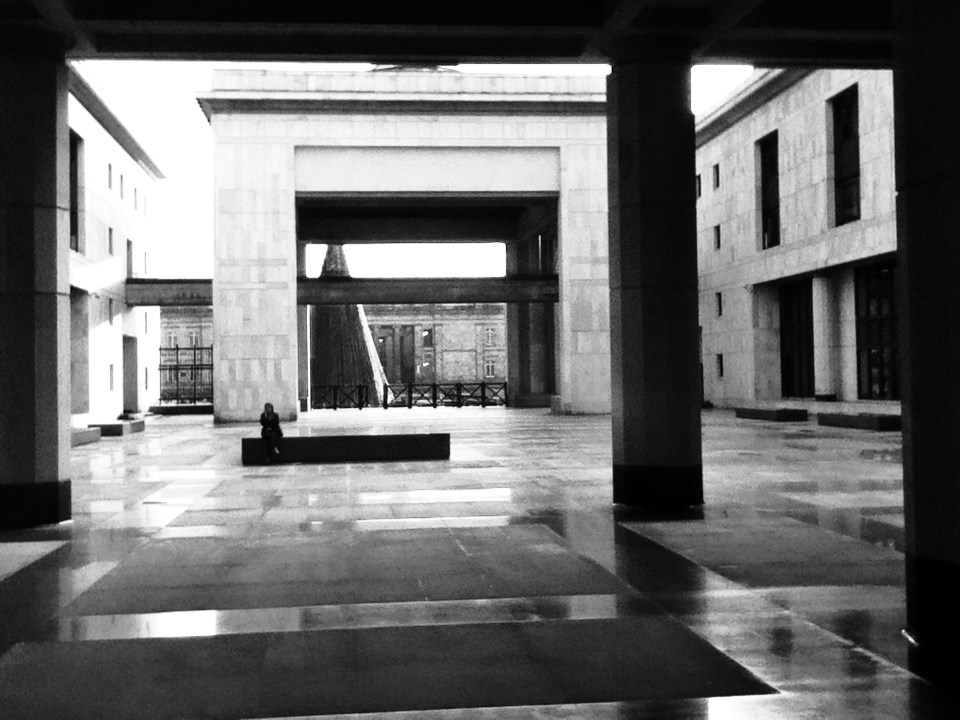
Photo by Jan Boesten (copyright). Judicial Palace, Bogota. November 2012

Photo by Jan Boesten (copyright). Judicial Palace, Bogota. November 2012

June 24, 2013
By Jan Boesten, PhD Candidate, Department of Political Science at the University of British Columbia.

With Hugo Chavez’s election last year, the recurrence of his illness and eventual death from cancer, the world’s attention focused on questions over the future of the Bolivarian revolution when it came to Latin American issues. Consequently, somewhat less noticed was the process under way in Havana, which might have just as deep implications for the stability of the region: the peace process between the Revolutionary Armed Forces of Colombia, better known by its Spanish acronym FARC, and the Colombian government.  For the first months – the negotiations started in October of last year – news reports on the peace process were pushed to the bottom of online news pages (or back pages, if you have a taste for vintage). Such neglect is surprising, given the tenacity of the “low intensity” conflict in Colombia.

As the dialogue in Havana made progress over the last couple months, we saw a resurgence of reports in several news magazines such as the Guardian, BBC, or the Economist. Unfortunately what is missing in some of these reports is the complex history of violence in Colombia; spanning more than six decades and tying different actors together and juxtaposing others in deadly opposition. This is inauspicious, because a more substantiated comprehension of Colombia’s violent history makes very obvious the potential pitfalls that lie in the peace process. The FARC’s pugnacious posture and its relation to the drug trade certainly are the most reiterated obstacles to peace, but they are far from the only ones. History has shown that the political reintegration and land reform benefitting the displaced population at the cost of large landowners are just as big barriers to overcome. The willingness of this sector of Colombian society and the ability of the state to apply the commitments made in Havana will soon come to a test. The negotiations started with a five point agenda involving land issues, participation in politics, drug trafficking, disarmament and reparation for conflict victims (the text can be found here). So far the biggest break through was announced on May 26 of this year, when both sides agreed on a plan regarding the issue of land reform (the declaration by the government’s chief negotiator Humberto de la Calle from May 26th, can be found here). Land reform is a crucial litmus test, because, historically, Colombia’s land owning elite has fought land reform with all possible means – including illegal ones such as paramilitary death squads – victimizing millions of Colombians. Time will tell whether the Colombian state has succeeded in becoming an autonomous actor that can impose its imperative even on vested powerful interests.

Understanding the relatively high level of mutual distrust, with which both parties view each other in Havana these days will not work without at least taking a quick glance at Colombia’s turbulent past. Violence dates back to the assassination of Liberal Presidential hopeful Jorge Elicier Gaítan in 1948. The death of the left-liberal populist divided the entire country along conservative and liberal party lines and left more than 200 000 people dead in what is known as La Violencia.

The fighting was appeased – but not terminated – by a power sharing deal between the two parties that itself had fundamental ramifications for the institutional history of Colombia. Occupation of the most important offices alternated between the two main parties. It gave the political system much needed stability and some legitimacy amongst elites, but excluded vast sectors of society that had begun to be politicized and mobilized by the commencing modernization of the country. In the inaccessible rural areas of the country, sections of the left wing of the liberal party formed autonomous communities that continued to be attacked by the armed forces. Fighters in these zones formed the nucleus of the FARC that officially formed in 1964 as a direct consequence of the exclusionary nature of the pacted “democracy”. Their ideological orientation turned from left liberal to openly communist as a reaction to the successful Cuban revolution five years earlier.

Another date of importance to understand the intricateness of the Colombian conflict followed 4 years later. In 1968, the Colombian state legalized, through Law 48, self-defense armies set up by land owning elites as a response to guerrilla attacks. This law was only repealed in 1989, when it became painfully obvious what damage such unaccountable armed groups can cause not only to civilians, but also to civil society and the democratic institutions rooted in its vibrancy.

The final caveat that makes reaching a permanent peace thus difficult is, of course, the impact the international narcotics trade has had and continues to have on the politics and lives of the citizens of the Andean nation. The profits that the export of cocaine generated where so high that drug king pins such as Pablo Escobar of the Medellín Cartel or the Orejuela brothers of the Calí Cartel could finance their own private armies that – utilizing structures built by land owning elites in the country side (legalized by the aforementioned law 64 of 1968) – morphed into the fastest growing armed group: the paramilitaries. The triad nature of the various factions of the conflict in Colombia are crucial for understanding the dynamics of the conflict and failure of the various attempts to reach a stable peace agreement. With the legalization of armed paramilitary groups, the Colombian state had conceded one of its core functions crucial for guaranteeing – among other things – the rule of law and the accountability of its democratic institutions: to establish a clear monopoly of violence.

The FARC, too, benefitted financially from the drug trade. From early on, it taxed narco-traffickers per kilo of cocaine that were exported from territory under its control. Several hundred million dollars generated thusly finance their armed struggle each year. It is possible that the FARC or some sections of the group have become involved more directly in the drug trade and actually organize the export of the narcotics, but this is a point of contention.

The suffering inflicted by this constellation is horrendous and the oftentimes unimaginable suffering behind the numbers of the conflict warrants that the world pays close attention to the peace negotiations that do have the potential to put an end to the world’s longest lasting internal conflict. Since the FARC’s founding in1964, more than 600 00 people were killed and 4 270 massacres took place, between 3.7 and 5 million were displaced, 48.585 people kidnapped (these numbers are from CINEP – a human rights NGO founded by Jesuit priests in 1972). The Colombian weekly La Semana puts the number of victims, who have suffered directly from the conflict since 1985, at 5.5 millions. This amounts to more than 10 percent of the entire Colombian population. In addition, according to the weekly, in 2012 alone 200 000 more Colombians were victimized as a direct consequence of the violence (you can find their victims project here).

This context is essential for understanding what is at stake and it is thus more than unfortunate that some articles that treat the peace discussions do not pay a whole lot of attention to the complexity of the conflict. The usually very well informed The Economist, wrote that “they [the FARC] twice used peace talks as a cynical tactic to regroup, only to try once again to seize power by force”. This is not only factually wrong, but also obfuscates the complicity parts of the Colombian state have had in undermining its own monopoly of violence, as well as attempts to reach a peace deal.

The two previous peace negotiations took place in the early 1980s until 1987 and from 1998 until 2002. While the latter clearly failed, because the FARC used the concessions made by the government to regroup and launch attacks against Colombia’s armed forces, the story was very different in the 1980s. Marc Chernick, Director of the Masters Program of Latin American studies at Georgetown University, wrote: “One of the shoals on which the Colombian process ran aground was the state’s inability to protect the lives of amnestied leaders and the steady descent into lawlessness signified by the assassination of hundreds of political and labor leaders during the cease-fire agreements and the period that followed”.

Prof. Chernick refers to the fate of the political party that could have paved the way for FARC guerrillas to return to civilian life and engage in legal politics – the Union Patriotica (UP). It consisted of demobilized guerrillas, left-wing politicians, union activists, and students from the left. In a politicide, over 3000 party activists were murdered in killing sprees that not only involved illegal elements from the drug trade, but also members of the state, such as the internal security service, DAS (Departamento Adminstrativo de Seguridad). Most FARC guerrillas returned to clandestiny when the second Presidential candidate, Bernadillo Amarillo, was assassinated by paramilitaries paid by drug lords associated with land owners. Repeatedly, the state was unable, and in many instances unwilling, to protect the demobilized guerrilla and live up to its commitments.

The history of the UP makes plausible, why the FARC is and has been reluctant to engage in a peace process. However, the Santos government, too, has reasons to be suspicious of the FARC, because of the fate of the peace negotiations from 1998 until 2002. The FARC let the peace negotiations fail due to its own hubris and arrogance. Delirious from its military strength, the FARC rejected even the Colombian constitution itself (which was the result with other guerrilla groups in 1990s and enjoyed far reaching legitimacy due to its progressive nature). Most infamously, the FARC lost all potential civil society support that might have been left by employing kidnapping and indiscriminate attacks (not only against the state, but also civil society organizations) as strategies of their struggle.

Thus, the question is: will the FARC’s hubris and intransigence pose the biggest threat to peace in the Andean republic or will the state’s debility be more harmful to lasting peace? A worrying detail of the last two decades is that Colombia has experienced a climax of parainstitutionalization, by which the functioning of its democratic institutions and, most importantly, the rule of law is gravely undermined by informal institutions rooted in particular interests. This co-optation undermined deliberative institution to the extent that they have become unable to solve collection problems. Only the remarkable independence of Colombia’s judicial institutions that have prosecuted legislators with ties to paramilitary forces, has prevented the worst. Nevertheless, it is far from clear that these informal institutions have vanished completely. In addition, one politician, long been accused of inappropriate closeness to these forces, has been playing a questionable role in the debates accompanying the peace process: Ex-President Álvaro Uribe. His reluctance as well as that of politicians and business interests associated with Uribismo fuel the fear that parainstitutionalization could indeed pose the gravest obstacle to peace.

The accusations against the former head of the state are not new. This is on the one hand due to this origin in a rich land-owning family, and, on the other hand, his closeness to persons directly involved in the drug trade and paramilitary groups. After the death of this father at the hands of FARC guerrillas (which motivated his strict opposition to the armed group), he served as a city council in the city infamous for the drug trade – Medellín. Photos from this period show his brother, Santiago Uribe, together with Fabian Ochoa of the Medellín cartel. In addition, a 1991 report by the Defense Intelligence Agency released in 2004, called Uribe a close friend of Pablo Escobar and as being involved in drug trafficking. Upon publication in 2004, the administration denied any such friendship and involvement. Neverthless, the Israeli mercenary, Yair Klein, who helped to train the evolving paramilitary groups, made a thinly veiled statement about who was the intellectual mastermind behind this: a powerful rancher, who would later become President of the Republic.

As Governor of Antioquia – a position he held from 1995 until 1997 – he strongly supported the CONVIVIR self-defense laws that – similar to la 48 from 1968 – encouraged the establishment of self-defense forces against guerrilla activity. Under the leadership of the Castaño brothers, who worked for Pablo Escobar and the Medellín Cartel and then turned against him in the search blocs organized by the Colombian state, these groups turned into the paramilitary umbrella group called the Autodefense Forces of Colombia (AUC). Finally, the former paramilitary leader, Salvatore Mancuso, has stated on several occasions that Uribe had won the elections that put him into the Palacio Nariño in Bogotá and secured his second term with the decisive help of the paramilitaries in rural areas, where they “campaigned” on his behalf – meaning coercing people to vote for him. Mancuso was extradited by the Uribe adminstration in 2008 and is in prison in the US on drug trafficking charges (but not for violating human rights).

Álvaro Uribe’s terms in the presidential palace in Bogotá are not an unequivocal success story either. While it is certainly true that his democratic security policy, which focused on the military component for appeasing the country, has played a crucial role in weakening the FARC and thus bringing them to the negotiating table, his second term in particular was also marred by political scandals. The revelations about the so-called DAS-gate and parapolitica scandals resulted in investigations by Colombia’s highest criminal court, which laid open the extent of infiltration and co-optation of the internal security apparatus and legislature.  Several high-ranking officers of DAS, Colombia’s internal security agency, were shown to be on the pay role of paramilitaries with direct relations to the drug trade. This included a former director. Parapolitica was the name given to the scandal that involved members of Congress (most of them part of Uribe’s coalition, but not exclusively), who had signed pacts of mutual support with the same paramilitaries. Their stated goal was the refounding of the nation. Both scandals are interdependent and reveal how informal institutions, rooted in particularistic interest, undermine the functioning of formal institutions. Ideally, those are supposed to provide a democratic system with accountability and security, instead they cannot ensure either. Not least, they indicate that some sectors of the Colombian political system and bureaucracy not only tolerated but protected the very forces that undermine the state’s ability to secure the monopoly of violence.

More than a few intellectuals and commentaries in Colombia have viewed Uribismo as the expression of the coexistence of these formal and informal institutions and had warned early on against a white washing of past crimes by paramilitaries in the course of the demobilization process, which Uribe initiated with the Justice and Peace law. In this regard, it is important to not that almost all stipulations protecting victims’ rights as well as the conditions for reducing prison sentences of confessing ex-paramilitaries were not in the original text of the law, but were only included after the Constitutional Court demanded them in its review of the law. Finally, the investigations by the Colombian Supreme Court have provided ample evidence that back-up the claims that deliberative institutions at all levels of government had been infiltrated by paramilitary interest. These inquiries have brought several high-ranking politicians from the Uribe administration behind iron bars; not least Álvaro Uribe’s cousin, Mario Uribe.

The ex-President’s fierce opposition to both, the land restitution process as well as the peace process with the FARC, feed the worries that legitimate critiques are rooted in more obscure intentions. In regards to the restitution process, Uribe has consistently critiqued the recognition of an internal conflict by the Colombian government. His administration only spoke of terrorists. Uribe claims that this recognition unduly legitimizes the FARC – a point reiterated by him and his political allies in the current Congress. When Uribe’s constant critique of these initiatives ignited the public fight between him and his successor Santos, the latter warned of the “dark forces” behind these attacks.

These “dark forces” have continued to show their negative influence on the application of the land restitution law. Security for the restituentes, people returning to their robbed land, remains precarious. Since the restitution law took effect in January 2012, there have been over 700 documented threats made against restituentes. Already before the law took effect, the Defensor del Pueblo counted over 71 assassinations of leaders of restituentes between 2006 and 2011; most often in areas where paramilitarism has been a historically strong force. In several cases, the victims had received death threats, but the state was unable or unwilling to provide the protection needed. Padre Alberto Franco of the human rights organization “Justicia y Paz” accompanies victims and endangered groups to their robbed lands to protect them from armed actors with the one thing they dread: publicness. He reported in a recent gathering organized by Amnesty International’s Berlin bureau that he and his colleagues receive constant attention by obscure persons. Their cars are followed and had even been shot at. Several other human rights organizations – national or international – report similar instances.

When the land restitution process angered Uribe, the peace process infuriated him. He went beyond simply uttering his displeasure with the current course of action: via twitter, he gave away sensitive military information. In a remote area, operations were halted to allow FARC members exit the area and attend the negotiations in Havana. Uribe tweeted the coordinates of this operation. Giving away sensitive military secrets is not a light matter and can be particularly devastating given the high levels of distrust between the government and the FARC. What is even more surprising and at the same time undermining Uribe’s position is that he critiques the Santos administration for legitimizing the FARC, even though the conditions for the talks and the continuation are the exact same as he had upheld as President for any negotiations involving a humanitarian exchange of prisoners: no demilitarized zone, no amnesty, and no unilateral cease fire. In addition, the point that it legitimizes a terrorist group is not very convincing, since potentially legitimizing a terrorist group did not defer Álvaro Uribe from negotiating and reaching an accord with the paramilitaries that resulted in the Justice and Peace process rooted in the law with the same name. Not only were they recognized as terrorists by the US and the EU, they have also been responsible for the majority of human rights violations, including horrendous massacres against civilians.

Finally, Uribismo and the forces associated with it have positioned themselves outside a quasi-consensus in Colombia that supports the land restitution process and the peace process with the FARC. In April of this year, all political parties were invited to the Universidad Nacional in Bogotá, Colombia’s biggest public university, to a forum jointly organized by the University and the United Nations in Colombia. The only important politicians missing were those associated with Uribe. The Federación Colombiana de Ganadores, under whose banner unite the producers of Colombia’s cash crop and agro-industrialists, lamented the announcement made on May 26th of this year, arguing that it legitimizes a terrorist group. This is the almost identical talking point that Uribe reiterates, the contradiction of which I already explained.

There is careful optimism in Colombia about the prospects of reaching peace. Many groups have come together and, while disagreeing on the specifics of the process, agree that the time is ripe to find a political solution to the conflict. This includes victims of the FARC such as Clara Rojas, who spent six years in captivity in the Colombian jungle along Ingrid Betancourt. Evidently, the experiences of the last (failed) peace negotiations with the FARC in Caguan are still very vivid and the distrust is (justifiably) high towards that armed group. In addition, the FARC must accept its responsibilities towards the victims of its actions. So far it only sees itself as a victim of state violence, but not as victimizer. A quick view at the pages on Colombia by Human Rights Watch or Amnesty International makes clear that that is not so: it has committed atrocities against civilians, even progressive civil society groups and not least has made a business of kidnapping people for ransom.

This is not a light point, since it raises fundamental legal questions. Colombia’s Constitutional Court has made it clear in its decision on President Uribe’s Justice and Peace law that any law of transitional justice cannot legalize impunity nor can the constitutional rights of victims to complete truth be relinquished. In addition, an agreement that would enable FARC leaders to move from the jungle directly to Colombia’s Congress without responding to their past crimes will not have the legitimacy amongst Colombians that is required for such a transformation. Consequently, there is still some ways to go and the FARC will have to move on these issues, if there is a chance for a lasting peace.

The difficulties with the FARC, which are not impossible to be solved politically, should not close the eyes before the dangers to peace that arise out of the parainstitutionalization the countries has experienced in the last two decades.  As shown, informal institutions born out of Colombia’s turbulent history have undermined the ability of the Colombian state to provide security and the rule of law from within. These continue to radiate influence with sometimes devastating effects on the lives of Colombians. It is in this regard where we as foreigners and observers outside of Colombia can help hold its government accountable. We must not tolerate that those who have suffered most gravely from the conflict, again face threats to their lives when they return to the lands that had been robbed before.
Between illusion and sense of mission: Chavez’ legacy viewed from Colombia

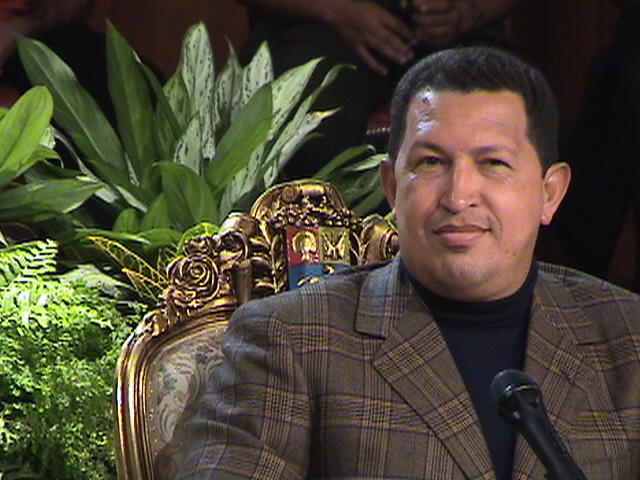
(Photo credit: Jason Tockman) A content Chávez commemorates the 2-year anniversary of overcoming the 2002 coup.

(Photo credit: Jason Tockman) A content Chávez commemorates the 2-year anniversary of overcoming the 2002 coup.

March 6, 2013
By Jan Boesten, PhD Candidate, Department of Political Science at the University of British Columbia.

Not long after the death of Venezuelan President Hugo Chavez was announced, several obituaries by international online news pages quoted Gabriel García Márquez’s words invigorating the ambiguous character of the self-declared Bolivarian revolutionary.  To the Nobel Laureate, it appeared like talking to two men: “One to whom inveterate luck has granted the chance to save his country. The other, an illusionist, who could go down in history as just another despot.” History will now tell, whether the achievements of uplifting millions of Venezuelans from poverty came at a too high cost for democracy in the Andean country.

Because Chavez developed a healthy sense of mission, which successfully radiated to other Andean countries in South America, Western countries predominantly viewed Chavez as a source of instability in the region. Here, too, history will now show whether this claim has any validity. The early demise of the Venezuelan leader is probably nowhere viewed with such anxiety as in neighboring Colombia. In the fall of 2012, news in Colombia reported on the status of the Venezuelan race that eventually gave the victory to Chavez before turning to the electoral fight between Barack Obama and Mitt Romney in the US. And indeed, Venezuela and Colombia’s relation is not only historically steeped, but was particularly delicate in the last decade. Yet, the reactions in Colombia are more subtle and balanced than one might expect in a country that was at the edge of war with the now deceased exactly five years ago. Reviewing these bilateral relations and the dominant sentiment in Colombia provides the opportunity to have more nuanced view on Chavez’s legacy.

The fragile relations between Venezuela and Colombia was focused on the very public fights between Chavez and his right-wing counterpart in Colombia, Álvaro Uribe, who was in power from 2002 until 2010. The two former President could not be more polar opposites: Chavez was born to a village teacher family Venezuelan state of Barina, while Uribe came from a rich and powerful land owning family in the Antioquia region; Chavez developed a ideology that mixed together brands of Catholic liberation theology, Gueveraian and Castroite Marxism, and Bolivarian nationalism, while Uribe placed traditional values rooted in peasant folklore and the focus on security on his banners. Yet, despite their difference, their taste for populism and political theatre to rally up support as well as a bipolar relation with democratic institutions united the two – if not in spirit, at least in posture.

Bipolar is also the best word to describe the relationship between the two: one day they would engage in friendly words, resulting in machismo competitions of manliness (who was better in riding a horse and drinking a cup of coffee at the same time. Uribe won) to a war of words, in which the accusations rifled at each other ranged from caudillo, to autocrat, paramilitary, to Nazi. The thorn in their association was Uribe’s friendly alliance with the US (particularly under George W. Bush) and Chavez’s anti-imperialist positions that he famously put on display at the United Nations in 2006 (saying it smelled like sulfur after George W. Bush – the devil in his words – spoke). The tension reached their climax in early 2008. Chavez had put a lot of political capital into enabling a humanitarian exchange between Colombia’s oldest guerrilla group, FARC, and the Colombian government. When the exchange failed in January 2008, both sides accused each other undermining the efforts, resulting into a furious spit of words. The cold war of words almost turned into a hot war after Colombia raided a FARC camp that was on Ecuadorian soil. Only after a few months did the heads cool down, but Chavez and Uribe would neither become friends nor partners and the bilateral relations between the neighboring nations remain tense until the end of the Uribe presidency. Later, the released prisoner, Clara Rojas, confirmed that Colombian helicopters in the region where the exchange was to take place undermined the prisoner exchange.

On a more general level, Marquez’s words describe well the sentiments Colombian’s have towards the charismatic leader in Caracas; suspicion towards the amassment of power and authority in the already powerful presidency, but respect and even admiration for trying to fundamentally change the rampant inequality and confront the oligarchical power of the elite – both issues that Colombians confront themselves and that undermined the quality of their own democracy. A taxi driver in Bogota – always the best people to ask to capture a general political sentiment – summarized the admiration for Chavez and why his policies hit home with many Colombian: “in Venezuela they have change without deaths, here we have no change with many deaths” – a reference to the violence inflicted by paramilitary groups to protect Colombia from the guerrilla curse that more often than not victimizes peasants, journalists, union leaders, and legitimate (left-wing) politicians.

Notwithstanding the accusation that Chavez was uncomfortably close to the FARC in Colombia – a point that most often came from the Uribe camp with obvious political intention – Colombians also worried about the Bolivarian revolution in Venezuela. Even though Colombians are very much aware of the unreasonableness of a political and economic elite, they are equally concerned when a people’s tribune amasses too much power at the cost of the democratic system. Colombian democracy itself was rescued by its high courts from an overpowering executive (Uribe) that tried to cement its rule by repeated re-election and a compliant and co-opted Congress. Not surprisingly, Colombians across the board view and viewed Chavez’s repeated changes to the Venezuelan Constitution very critically. Related to that and also close to home, the packing of the highest Courts in Venezuela, which effectively paved the way for allowing constitutional change (and thus Chavez’s re-election), leaves a very negative mark with Colombian – after all, Uribe also tried to, but did not succeed, pack the Courts to have the referendum for constitutional change pass that would allow his re-election

The departure of Uribe from power in Colombia allowed for a rapprochement between the new President in Colombia, Juan Manuel Santos, and Chavez. It placed the bilateral on a much more pragmatic level, which had great benefits for Colombia: several high-ranking narco-traffickers were caught in Venezuela due to the better co-operation between Colombian and Venezuelan police – among them the last big capo of the Cartel epoch Cáyo “El Loco” Barrera. In addition, the ideological closeness between Chavez and Colombia’s long-living guerrilla could be utilized to bring the Colombian government and the FARC together for peace talks. Not surprisingly, Santos praised Chavez in his reaction for enabling the peace talks currently under way in Havana, Cuba.

With Chavez now gone, worries are great for what it means for stability in the neighboring country and how this might affect the situation in Colombia. Evidently, no one commands the masses the way Chávez did – least his heir apparent Nicolás Maduro – resulting in worries of whether Maduro will actually follow through with new Presidential elections. In short, Colombians are worried, whether the autocratic traits of Chavismo – centralization of power and populism – come to dominate or whether its inclusionary and democratic achievements undermine a regression to authoritarianism. Not having lost sight of both sides of the medal, the discussion in Colombia is much more balanced. While people in North America and Europe are caught in simplistic categories of good and bad left, which evidently echo Cold War categories, Colombians and probably most Latin Americans have a more nuanced view on the legacy of Chavez- understanding the new chance without loosing sight of the implicit dangers.

Free Download: Democracy within the Framework of the IADC

Hot off the press and available for free download:

Democracy within the Framework of the Inter-American Democratic Charter: the View from Academia and Civil Society (Spanish): http://www.idea.int/publications/democracy_within_the_framework/index.cfm

Published by: International IDEA, Asociación Civil Transparencia, the Carter Center and Unidad Andina para la Gobernabilidad Democrática, Embajada de Canadá.

Mirando a Canadá: Santiago Mariani en La Republica

See article in La Republica: http://www.larepublica.pe/columnistas/desde-fuera/mirando-canada-20-03-2012

Martes, 20 de marzo de 2012 | 5:00 am

Mirando a Canadá

En el reciente artículo El futuro de la integración hemisférica, publicado en The Mark, el prestigioso politólogo canadiense Maxwell Cameron, se refiere a las difíciles decisiones que enfrenta su país en el relacionamiento con los países de la región a partir de los profundos cambios que se han producido con la pérdida de influencia de EE.UU., el boom económico de AL derivado de la expansión de la demanda de materias primas por parte de China y el ascenso de Brasil como un actor respetado en la arena internacional.

El signo más contundente que marca la finalización de esa etapa de cooperación y prosperidad hemisférica que tendría lugar como resultado de la aplicación de un modelo enmarcado en políticas de privatización, acuerdos de libre comercio y desregulación es, como señala el artículo, la exclusión deliberada de los EE.UU. y Canadá en la conformación de la CELAC, un impulso a la integración con sello propio originada por las condiciones estructurales.

El análisis de los distintos caminos a seguir por Canadá, que propone Cameron frente a las nuevas realidades, representa también una interesante oportunidad para pensar, desde el otro lado, cómo los países de la región podrían a su vez vincularse a Canadá a modo de fortalecer y expandir los temas de interés estratégico. Un punto central en esta tarea es el abordaje sobre la difusión, defensa y fortalecimiento de la democracia.
La democracia ha sido capítulo central de la política exterior de Canadá en su relacionamiento con el hemisferio y esa debería seguir siendo su prioridad según la propuesta de Cameron. El antecedente más importante está representado por el activo papel que tuvo en la discusión y adopción  de la Carta Democrática Interamericana, un instrumento promovido por los peruanos para evitar la repetición del proceso de erosión democrática llevado adelante por Fujimori desde el poder. Perú encontró en Canadá a un comprometido y vital aliado en esa causa.
Canadá propone desarrollar y adoptar, mediante un amplio proceso de consultas, un compendio de buenas prácticas democráticas como modo de fortalecer los postulados de la Carta Democrática Interamericana de respeto al principio de la división de poderes, la representación fortalecida por una mayor participación e inclusión social y la vigencia plena del estado de derecho. En esa agenda coinciden los agentes democráticos de la región.
A partir de la conformación de la CELAC conviven en su seno dos acuerdos de integración política, ALBA y UNASUR, que representan dos realidades contrapuestas entre una organización que incluye a países no democráticos y otra que ha hecho avances muy sólidos para darle a su estructura una serie de novedosas cláusulas operativas en la promoción y defensa de la democracia. Desde entonces se ha tornado más estratégico que nunca la articulación y profundización de una agenda democrática, con el apoyo de países como Canadá, para que la marca constitutiva y el motor del inédito proceso de integración que está teniendo lugar sean la difusión, promoción y fortalecimiento de sistemas democráticos sólidos e institucionalizados.

http://santiagomariani.blogspot.com

Debating the Democratic Charter on its 10th Anniversary

(Ver versión en español traducido por Paolo Sosa, aquí:  http://www.politai.pe/

By Max Cameron

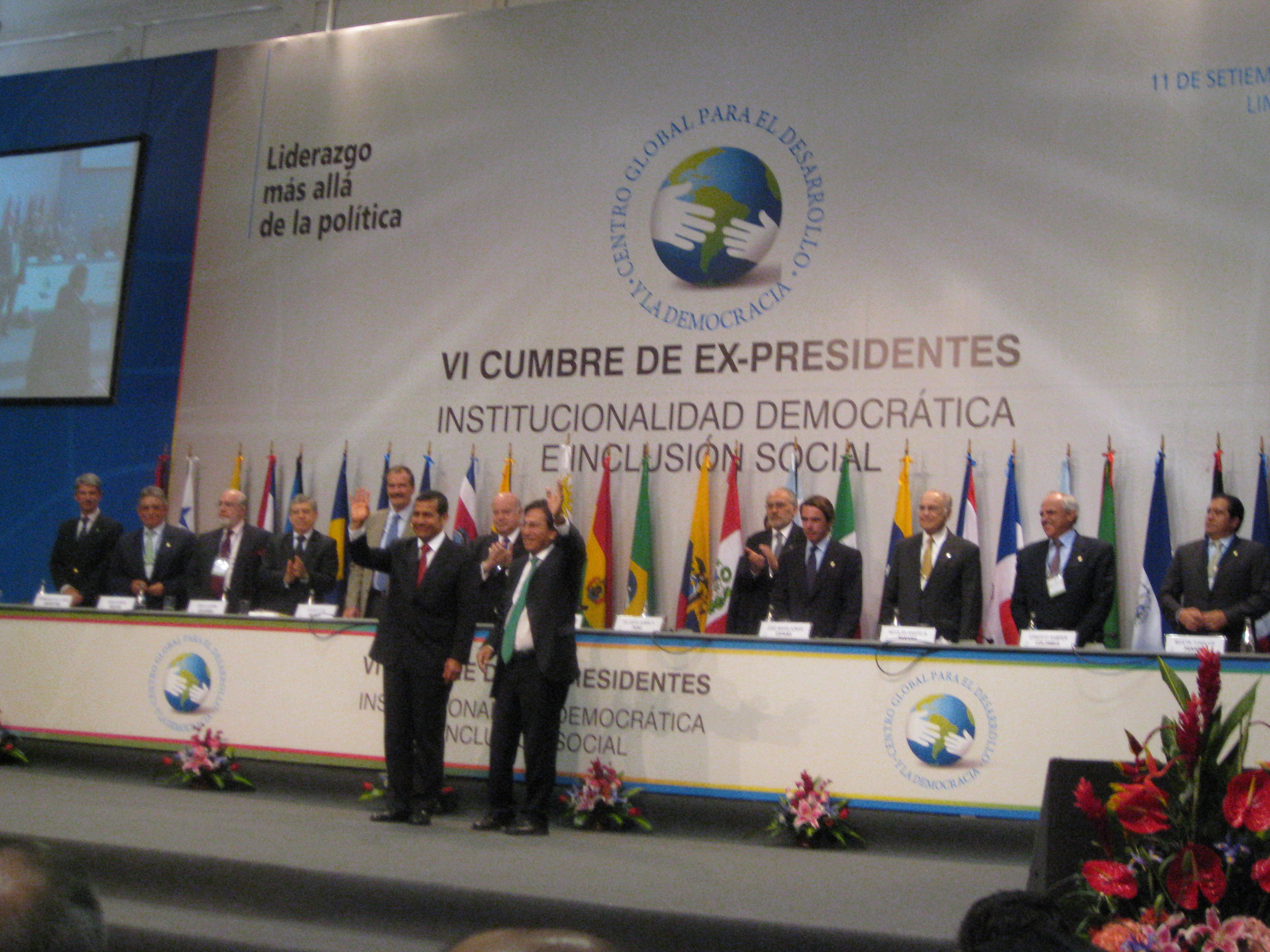
On September 11, 2011, Alejandro Toledo, the former president of Peru (2001-2006) held the “6th summit of ex-presidents” in Lima, which included Vicente Fox, Carlos Mesa, Nicolas Artido, Antonio Saca, Ernesto Samper, Fernando de la Rua, Hipolito Mejia, Martin Torrijos, Gustavo Noboa, Rodrigo Borja, Jaime Paz Zamora, Cesar Gaviria, Jose Aznar, and the Secretary General of the OAS, Jose Miguel Insulza. President Ollanta Humala opened the meeting and one of his first comments was about the need to democratize the summit with more ex-presidents. I think that may have been a subtle hint that the group needs to be a little more diverse. Lula sent a letter, but it would have been nice to have had Bachelet both for gender and ideological balance. Since Latin America has been swept by a red-tide, it is inevitable that a meeting of ex-presidents tends to tilt to the right. But then so did the audience.

Ollanta Humala gave a decent speech. He argued that democracy means that the voices of all must be channeled through the political process, without opinions being fragmented or excluded. He talked about how there are democratic deliberations in communities throughout the land, but whereas some groups have the power to translate their views into law, others can only influence politics through mobilization. I said Peru’s republic has always excluded the indigenous, the cholos, the slaves. Indeed, democracy did not come with the republic and independence. He also called for parties that are not identified with individual personalities and criticized the tendency to caudillismo in Peru, which I thought was rather interesting given his own personality-driven approach to politics. Finally, Humala spoke of the importance of creating a Peru in which people can live in communities where there is clean potable water, their kids can go to school, and people can enjoy a decent life.

From my perspective, the worst presentation by the ex-presidents was made by Aznar. He seemed to want to take Humala’s speech as somehow implying that all Peru needs is a more efficient state. There are no alternative models, only markets and democracy, and there cannot be two or more Latin Americas any more than there can be two Germanys.

Insulza argued for better monitoring of compliance with the Democratic Charter. Recognizing that states don’t like monitoring, he suggests that rather than a democracy rapporteur, there should be a peer review process. He argued for an increase in the capacity of the OAS to review situations in which democracy is at risk. Preventive action requires that the government in question requests OAS involvement. This hinders the capacity of the Secretary General. He said we should not reopen the democratic charter. Just look at ideological division of region, if you open the Charter it will all fall apart. But there is room for additional resolutions to strengthen it. We need, for example, a better definition to “serious ruptures.” These are not defined, but it is clear that in Quebec in 2001 the chiefs of state understood this to mean more than coups. It means intervention in other powers of the state – the dissolution of another branch – or massive fraud. Another example would be when states close all or most of the media. If these things are defined on a case-by-case they become politicized. Above all, unity of the region should be maintained.

Gaviria’s point was that the Democratic Charter has the same status as the OAS founding Charter. There are mechanisms to implement it. If countries don’t use them, that is because they don’t want to. If they want to act, they can; the Charter empowers them. That said, he felt that the power of the Secretary General should be reinforced.

Fox made a weird case for decriminalization of drugs. He said drugs should not be the last prohibition. We’ve legalized abortion, and gay marriage, but not drugs. Say, what?

Carlos Mesa noted that Latin America has a history of executives attacking legislatures and vice versa, but noted that it is hard for judges to destabilize democracy. Yet who defends the judiciary? If judges want an audience in OAS, the executive will be the first to block them.

Noboa harangued us about Correa concluded with the prediction that all forms of 21st Century Socialism are but steps toward totalitarianism. I was more impressed by Borja’s criticism of Correa: that he uses the rhetoric of socialism but has done little to implement socialist reforms. Instead, he has spent most of his time building up presidential powers.

My own intervention can be found in the previous post. Rather than reading the speech, however, I improvised a bit and threw in a few lines to pick up on previous interventions. In particular, I tried to reinforce Humala’s message about the importance of recognizing that there is no single model of democracy and that democracy means not just respecting a given democratic model but also the right to choose the form of government that the public wants. I suggested he did the right thing by swearing himself in on the 1979 rather than 1993 constitution, because it is valid to talk about the kind of constitution one wants. That was the point that generated the most controversy. That, and the suggestion the OAS should apologize to Chile for holding its General Assembly in Santiago in 1976 in the height of the military dictatorship. That is the other anniversary of this day: the coup in Chile was 38 years ago.

Here is the final declaration of the ex-presidents. “Constituir, en el marco del Centro Global para el Desarrollo y la Democracia, y como aporte de la Sociedad Civil, un mecanismo de observación y monitoreo de los avances y promoción de los principios establecidos en la Carta Democrática Interamericana de su aplicación y de alerta temprana en los casos de alteración de la institucionalidad democrática en los países de la Región, con la finalidad de coadyuvar a los esfuerzos que en ese mismo sentido realizan las organizaciones regionales y subregionales. El mecanismo tendrá una Secretaría Técnica encargada del desarrollo de mecanismos e indicadores que permitan la evaluación y el monitoreo. Con base a las recomendaciones de la Secretaría Técnica los Ex Presidentes se reunirán para deliberar y, en su caso, actuar en consecuencia.”

Sounds good. The challenge will be, as it is with the Charter itself, how to execute this mandate.


September 11th, 2011 at 7:50 pm

The Inter-American Democratic Charter and the Evolution of Democracy in Latin America: Strengths, Weaknesses and Recommendations

By: Max Cameron

The following comments were prepared for presentation in the “VI Cumbre de Ex-Presidentes: Institucionalidad Democrática e Inclusión Social,” organized by the Centro Global para el Desarrollo y la Democracia, Hotel Country Club, San Isidro, Lima, September 11, 2011.

Executive Summary

The Strengths of the Charter are that it:
– defined democracy as a right;
– encompassed more subtle threats;
– made democracy a condition of OAS membership.
The Weaknesses of the Charter are that it:
– did not recognize multidimensionality of democracy;
– was vague on what counts as an interruption/alternation of the democratic order;
– has very weak enforcement mechanisms.
Recommendations for improvements include:
– clarification of the meaning of interruption/alternation of the democratic order;
– creation of a democracy traffic light;
– establishment of a democracy inspector.

Introduction: The Strengths of the Charter

The Inter-American Democratic Charter, adopted by the members of the Organization of American States on September 11, 2001, represented three major steps forward with respect to the defense and promotion of democracy in the Western Hemisphere.

First, it established representative democracy as a right, and it defined the elements of democracy broadly to include “free and fair elections,” a “pluralistic system of political parties,” and the “separation of powers and the independence of the branches of government.” The Charter also recognized the “right and responsibility of all citizens to participate in decision relating to their own development” as a condition for the “full and effective exercise of democracy.” Despite references to participation, however, and notwithstanding objections by Venezuela, democracy was defined as a representative regime.

Second, the Charter broadened the understanding of threats to a democracy to encompass the more subtle challenges that had confronted Peru and other Latin American countries in the 1990s. For this reason, the Charter refers to “situations” that may affect “the democratic political institutional process or the legitimate exercise of power” (Article 18). Under Alberto Fujimori, for example, Peru had experienced democratic backsliding without recourse to the kind of conventional military coup that policy makers had in mind when they wrote of “sudden or irregular” interruptions of democracy in Resolution 1080 in 1991.

Third, the Charter reworked the compromise between non-intervention and democracy that was already implicit in the 1948 OAS Charter. This meant not only that the entire Hemisphere accepted democracy as the basis of membership in the OAS, but also that the most powerful states in the system, including the US, could not sponsor or accept non-democratic regimes within the OAS. It is worth recalling that the 1976 OAS General Assembly was held in Chile at the height of the Pinochet dictatorship.

The Problems with the Charter

From the outset, the Charter had three problems.

First, the meaning of democracy grew more contested after the Charter was signed in 2001, especially after a wave of left-wing governments emerged in the context of crises of representative democracy. Since that time, Latin America has undergone considerable democratic experimentation. Most governments (across the ideological spectrum) continued to regard free and fair elections as the cornerstone of electoral democracy, but many failed to uphold basic constitutional rules. In particular, judicial independence has often been undermined. A number of governments have promoted direct participation in an effort to make democracy more meaningful, but often in ways that did not reinforce representative institutions. Since democracy is a multidimensional concept, it is possible for progress along one dimension to be accompanied by backsliding along another. The consensus around the key elements of representative democracy in 2001 gave way in the face of a more diverse array of models of democracy.

Second, the meaning of an “unconstitutional interruption of the democratic order or an unconstitutional alteration of the constitutional regime” (Article 20) was left undefined. Despite efforts—both by scholars and policymakers—to specify what this language means, confusion often arose over when countries were not in compliance with the Charter. Even more crucially, the ambiguous phrase was followed by a key qualifier: the interruption or alteration of democracy would only enable the OAS to act if it “seriously impairs the democratic order in a member state.” That, obviously, would be a matter for political judgment. Yet the last decade has seen the growth of tensions within the OAS with respect to the how to exercise such political judgment.

Third, the Charter had very weak enforcement mechanisms. As a political document, it depended on the will of the member states, and they typically did not like to criticize each other. Moreover, the Secretary General needs permission to send a mission to investigate abuses of democracy (see Article 18). But, of course, the abuses of democracy are most likely to occur due to the behavior of the governments and leaders in question. Another way of putting this is to say that the Charter has a bias in favor of the executive: legislatures and courts have no standing in the OAS, and hence no formal role to initiate the enforcement provisions of the Charter.

Recommendations to Reinforce the Charter

In order to more fully realize the Charter’s potential as an instrument for flexible and preventive diplomacy, it needs to be reinforced. These changes would not necessarily require formal amendments to the Charter. They could take the form of codicils or complementary efforts in at least three general directions.

While recognizing the diversity of democratic regimes, it is necessary to establish the minimum features beyond which no country can be considered democratic. This also involves more clarity on what counts as a coup, and what must be done when a constitutional order has non-democratic features. As a point of departure, the 8 points outlined by former US President Jimmy Carter in his 2005 speech to the OAS might be formally adopted on a voluntary basis as a codicil to the Charter.

Mr. Carter’s 8 points include: “1. Violation of the integrity of central institutions, including constitutional checks and balances providing for the separation of powers.

2. Holding of elections that do not meet minimal international standards. 

3. Failure to hold periodic elections or to respect electoral outcomes.

4. Systematic violation of basic freedoms, including freedom of expression, freedom of association, or respect for minority rights.

5. Unconstitutional termination of the tenure in office of any legally elected official.

6. Arbitrary or illegal, removal or interference in the appointment or deliberations of members of the judiciary or electoral bodies.

7. Interference by non-elected officials, such as military officers, in the jurisdiction of elected officials.

8. Systematic use of public office to silence, harass, or disrupt the normal and legal activities of members of the political opposition, the press, or civil society.”

Making assessments with respect to whether member states are in compliance with the Charter along the lines of Carter’s 8 points should be based on solid empirical evidence. The Inter-American system lacks robust monitoring and reporting on the state of democracy. Such reporting should be arms-length from both the OAS and member states, and should result in publicly accessible, peer-reviewed research. At the same time, the empirical research needs to be presented in a format that is useful for policymakers.

An effort to develop a mechanism for monitoring and reporting on the state of democracy in the Andean region was undertaken by a group of scholars under the aegis of the Centre for the Study of Democratic Institutions at the University of British Columbia, the Andean Commission of Jurists, International IDEA, and the Carter Center. Together, these groups created the Andean Democracy Research Network and commissioned a series of studies on the state of democracy in the Andean region. Over 20 scholars were involved from six countries. These studies adopted a common methodological template which examined not only the electoral and constitutional features of democracy, but also the issues of citizenship and participation that have become central to the debates on the quality of democracy over the past decade.

Monitoring would be most useful if it were to highlight those situations in which a member state is at risk of serious impairment of democracy. A “democracy traffic light” could usefully identify the political regimes in which such risks exist. Member states in good standing would be given a green light. There is one country in the Western Hemisphere that is unequivocally non-democratic, and which would be given a red light (Cuba). But there are a number of other regimes that have both democratic and authoritarian features. If the authoritarian features are sufficiently strong this may indicate the impossibility of holding elections that can be considered to be free and fair by the international community. Such regimes exist in a zone of indeterminacy between democracy and authoritarianism, and would be given a yellow light.

A yellow light would indicate the need for collective deliberations by OAS member states. Ideally, this would trigger the Chapter IV provisions of the Charter. Since this does not occur due to the Charter’s “Catch-22,” alternative institutional mechanisms are needed. For example, the Inter-American system could create a “democracy inspector.” The work of the democracy inspector would be similar to the Truth and Reconciliation Commission in Honduras. A less ambitious version of the same idea would be a peer review mechanism. This might begin with the development of a compendium of best practices in democratic governance, an idea proposed by the Canadian government in the most recent General Assembly of the OAS.

Conclusion

The Democratic Charter is a work in progress. It represents an advance over previous instruments and has the potential to be use in proactive and preventive ways to reinforce democracy in the Western Hemisphere. At the same time, it is a flawed document that has a number of loopholes and vague provisions that need to be tightened and more sharply defined. Much of this can be done without amending the Charter, but it demands leadership with vision and energy, both inside and outside the OAS.

Cameron comments on Indigenous protest and the energy sector

Max Cameron comments on Indigenous protest and the energy sector in the Inter-American Dialogue’s Latin America Energy Advisor.

Download PDF here.

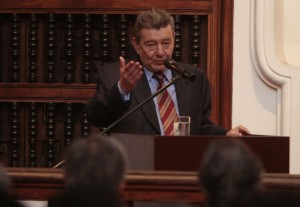
Rafael Roncagliolo Appointed Foreign Minister of Peru

Congratulations to Rafael Roncagliolo, a founding member of the Andean Democracy Research Network, who has been appointed Minister of Foreign Affairs in Peru.

For the full story, and source of the photo, see “New Peruvian Cabinet takes office today,” in ANDINA – Peru News Agency.